
Lyme and Other Tickborne Diseases
Anaplasmosis Incidence
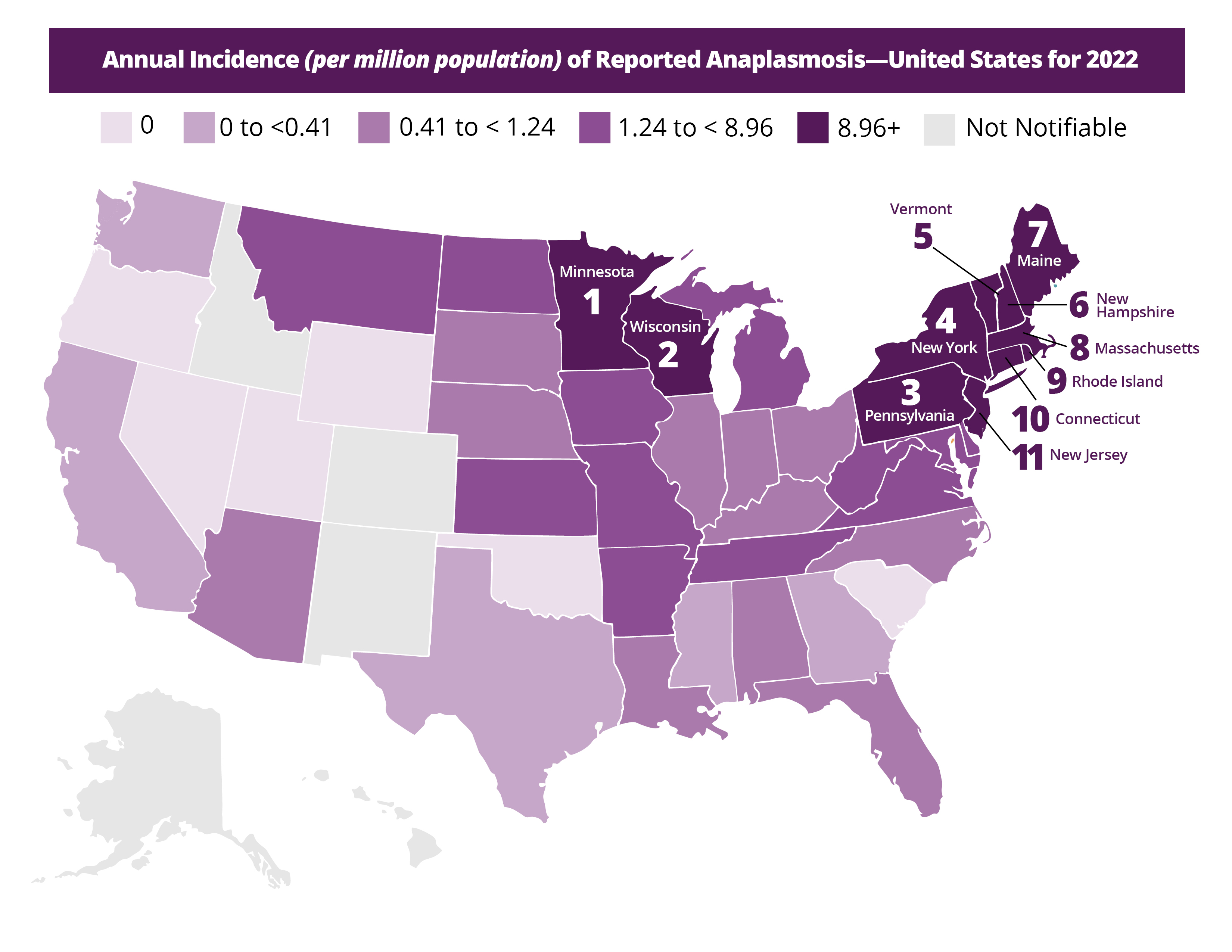
Anaplasmosis is the second most reported tickborne disease in Pennsylvania and has been found in every county. The number of confirmed cases has risen from 21 in 2015 to 1,292 confirmed cases in 2023 (the most recent year for which case data is available); an increase of 6052%. According to CDC data, in 2022 (the most recent year for which incidence data is available) Pennsylvania had the 9th highest incidence of Anaplasmosis in the country and was one of the eleven states with highest annual incidence per million population.
Lyme Disease Incidence
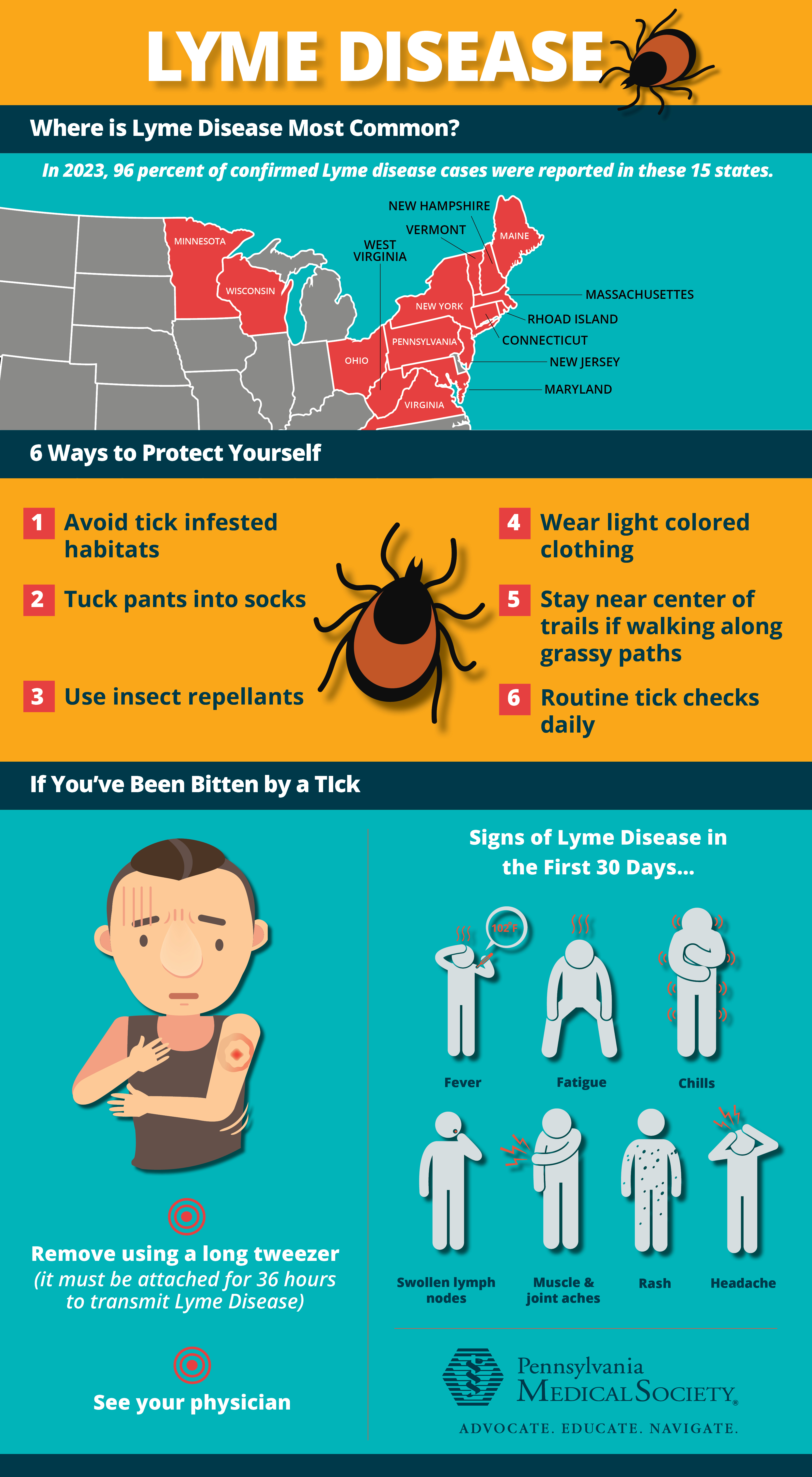
Pennsylvania is designated by CDC as a high incidence state for Lyme disease, meaning there has been an average incidence of at least 10 confirmed cases of the disease per 100,000 people for three years. There are currently 18 high incidence states in the U.S.
Tickborne Disease Frequently Asked Questions
- What tickborne diseases are prevalent in Pennsylvania?
- How do ticks spread disease?
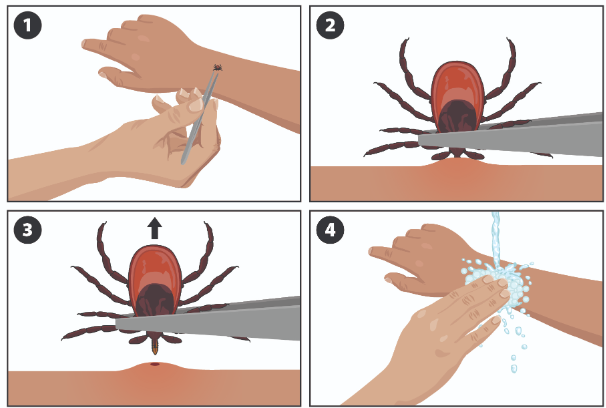
- How do you remove a tick?
- How do you dispose of a tick after you remove it?
- When should you see a physician?
- Why should you see a physician immediately after showing signs of a Tickborne Disease?
- What is the best way to prevent tick bites?
- How can physicians learn more?
.jpg?sfvrsn=496b67d5_1 "Tickborne Pathogens in PA - Part 1 & 2")
Quick Links:
- Lyme Disease Resources (CDC)
- Pennsylvania Department of Health Resources
- Tick Bite: What to Do (CDC)
- Tick ID (CDC)
- Ticks and Tickborne Disease (CDC)
- Tick Removal Fact Sheet (CDC)
- Tick Bite Guide (CDC)
- PA DOH Tickborne Disease Dashboard
- PA DOH Health Alert Lyme Disease and Other Tickborne Diseases in Pennsylvania
- Phila Dept. of Health Alert Tickborne Diseases in Philadelphia: Recognition, Reporting, and Prevention


Copyright © 2025 Pennsylvania Medical Society. All rights reserved.