
Shattering Stigma and Shaping Care
Last Updated
Jan 22, 2026, 14:46 PM
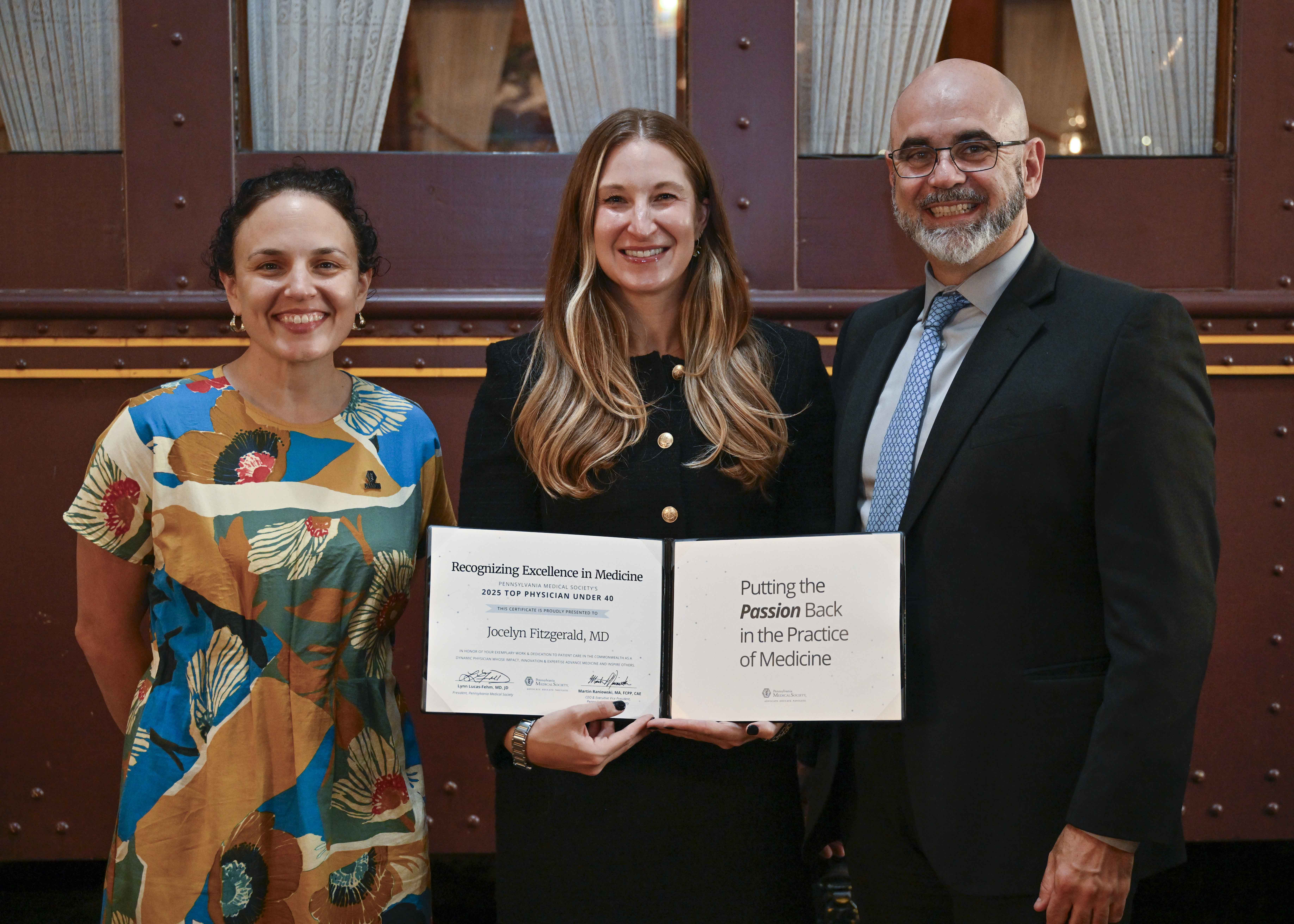
In the heart of Pittsburgh, Jocelyn Fitzgerald, MD is leading a quiet revolution that is reshaping how we understand, value, and deliver women’s health care. As a urogynecologist and reconstructive pelvic surgeon, she is not only treating complex pelvic floor disorders but also challenging the systemic inequities that have long plagued women’s health.
Currently an assistant professor of obstetrics and gynecology at the University of Pittsburgh School of Medicine, Dr. Fitzgerald’s career is a testament to academic excellence and fierce advocacy. Her journey began at Penn State’s Schreyer Honors College, where she earned dual degrees in neurobiology and women’s studies. She later graduated from the University of Pittsburgh’s Physician Scientist Training Program, where she began her research into the overlapping mechanisms of bowel and bladder pain, conditions that disproportionately affect women and are often misunderstood.
Her calling to medicine, however, began long before medical school.
“I recognized early on in my career, really as early as high school, that women had unique health care needs that were being inadequately addressed and holding them back from reaching their full potential,” she recalls. “This starts early. There is a lack of adolescent gynecology, misinformation about periods and school and sports, and then a dearth of information about contraception, empowerment in relationships, and family planning.”
As she observed how women’s health was often overlooked or stigmatized, her purpose became clear.
“As women's bodies transform throughout their life, they are held back by pelvic pain, incontinence, prolapse, and other taboo disorders that are often not addressed with their doctors or publicly,” she says. “I knew that it was my calling to give these conditions, and the millions of women who experience them, a voice and the knowledge that they could seek treatment and get on with what is important in life.”
After completing her residency at Johns Hopkins and a fellowship at Georgetown University/MedStar Health, Dr. Fitzgerald returned to Pennsylvania with a mission: to elevate the field of urogynecology and ensure that women across the commonwealth, in both urban and rural areas, have access to specialized care. She now serves as the urogynecology director of the UPMC Chronic Pelvic Pain Clinic and Endometriosis Center, traveling as far as Altoona to treat patients who might otherwise go without care.
But Dr. Fitzgerald’s impact extends far beyond the clinic. She coined the term “Gyneconomics” to describe the discriminatory reimbursement and funding disparities in gynecologic surgery and women’s health research. Her work in this area has sparked national conversations and earned her prestigious honors, including the 2024 Society of Gynecologic Surgeons Rising Star Award and the 2023 Impact Award from Women Who Rock.
“The work that we do in treating urinary incontinence and pelvic organ prolapse restores women's lives in a way that is deeply important to our economy and communities,” she explains. “However, patients and providers are often unaware that our specialty exists, our specialty is extremely undervalued, and the research is underfunded.”
Dr. Fitzgerald’s research reveals stark disparities in health care funding. “On equivalent procedures between women and men in gynecology and urology, urology procedures reimburse, on average, almost 50 percent more. And when it comes to urinary procedures, it's 150 percent more,” she says. “If you're a man with a penis problem walking into a hospital, you're worth 150 percent more money to that hospital than a woman with a vaginal problem. And that’s not ok.”
One of her top advocacy goals is fair reimbursement for endometriosis surgery. “There is only one code for endometriosis surgery, and it has very low reimbursement,” she explains. “Some of these surgeries can take eight hours, but surgeons get paid the same amount no matter the complexity. Hospitals won’t even allow some providers to operate because it’s not financially viable. That cost is being passed on to women, who go into debt just for a chance at relief.”
Dr. Fitzgerald also fights for proper representation in health care policy. “There are 32 people on the AMA committee that reviews the value of all the codes. Only five are women. Gynecologic surgery doesn’t have its own representative, even though every other surgical specialty does,” she says. “We’re trying to fix that.”
Beyond research and policy, Dr. Fitzgerald has embraced the power of social media as a tool for education and advocacy. With over 40,000 followers on X (formerly Twitter), she connects with a national audience. “Social media has been huge for me,” she says. “I’ve gotten to know people I never would have met who read what I shared, got mad, and connected me with people who could make change.”
As chair of the Society for Gynecologic Surgeons’ Social Media Committee and social media editor for the journal “Urogynecology,” she believes digital platforms are transforming how women learn about their health. “Younger women already know about pelvic floor health, endometriosis, and medical gaslighting because they see it in their feeds. Women in their 60s didn’t have that and suffered for years. But the next generation isn’t going to accept wearing diapers for 20 years. They’re demanding answers.”
At the core of everything she does is her connection to patients. “Everyone takes their bladder for granted until it stops working right. My goal is to get women to a place where they don’t even have to think about it anymore,” she says. “When someone tells me, ‘You gave me my life back. I can go to church without leaving twice, I can go on vacation without bringing antibiotics just in case,’ that keeps me going.”
Her commitment to mentoring the next generation is just as strong. “Medicine is a vocation, not just a profession,” she reflects. “There are a lot of meaningful things someone smart and hardworking can do that are easier than being a doctor. But if you can’t imagine doing anything else, and you’re OK with the discomfort of the system, it will be incredibly fulfilling.”
Being named a Top Physician Under 40 is a proud milestone for Dr. Fitzgerald, but also a platform to advance her mission.
“I have deep love for the commonwealth of Pennsylvania and the health of the women who form the foundations of the communities we live in,” she says. “This nomination validates that the efforts I make every day on their behalf are paying off.”
In a field where silence and stigma have too often prevailed, Dr. Jocelyn Fitzgerald is a powerful voice for change. She is uplifting women, transforming care and redefining what it means to be a physician in the 21st century.




Copyright © 2025 Pennsylvania Medical Society. All rights reserved.